How to Complete a Double Materiality Assessment in 5 Simple Steps
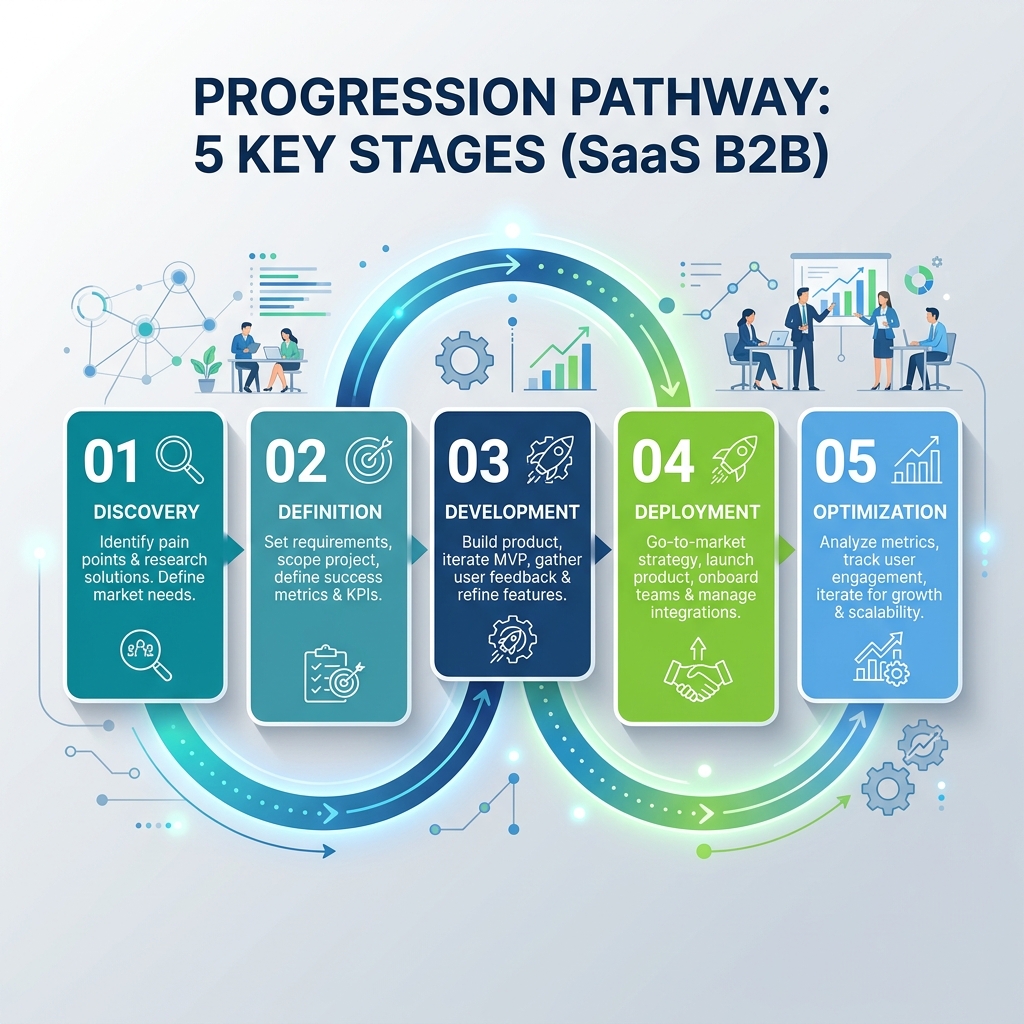
The Double Materiality Assessment (DMA) is the defining requirement of modern European sustainability reporting. While the concept—evaluating both inside-out impacts and outside-in financial risks—is easy to grasp in theory, executing it practically can feel overwhelming for Small and Medium-sized Enterprises (SMEs).
Under the Voluntary SME (VSME) standard, if you are selling B2B to large corporate buyers, completing a DMA is key to unlocking the Business Partners Module. This module acts as your reporting shield: it identifies which advanced data points are relevant to your business, preventing you from wasting resources collecting unnecessary metrics.
To complete a compliant, audit-ready DMA without hiring expensive consultants, you need a structured operational path.
In this guide, we break down how to complete a Double Materiality Assessment in 5 simple steps, mapped directly onto the ExecutESG 10-Task Technical Engine and the 9-Step Doctrinal Leadership Journey.
The 5-Step Process (ExecutESG Mapping)
By separating the technical database tasks from the leadership experience, ExecutESG turns a complex compliance project into a repeatable, step-by-step journey.
 ┌─────────────────────────────────────────────────────────────┐
 │                      THE 5-STEP ROADMAP                     │
 ├─────────────────────────────────────────────────────────────┤
 │  Step 1: Setup & Value Chain Context (Tasks 1 & 2)          │
 │  Step 2: Impact Identification & Validation (Tasks 3 & 4)   │
 │  Step 3: Stakeholder Engagement & Pairwise Voting (Task 5)  │
 │  Step 4: Financial Scoring of Risks & Opps (Tasks 6, 7 & 8) │
 │  Step 5: Consolidated Review & Declaration (Tasks 9 & 10)   │
 └─────────────────────────────────────────────────────────────┘
Step 1: Setup & Value Chain Context (Tasks 1 & 2)
Before you can evaluate sustainability topics, you must define the boundaries of your business and map your operations.
Task 1: Project Setup
The sustainability manager initializes the ExecutESG workspace, defines the reporting parameters, and adds internal team members. This represents the planning stage where responsibilities are assigned.
Task 2: Context Analysis
The team maps the physical boundaries of the company's value chain. This includes:
- Upstream: Sourcing of raw materials, vendor locations, and supplier labor practices.
- Direct Operations: Energy usage, waste production, and employee safety in your owned offices and warehouses.
- Downstream: Product delivery, shipping logistics, customer use, and end-of-lifecycle disposal.
Mapping these boundaries ensures you do not just report on your immediate office building, but capture the holistic impact of your business model.
Step 2: Impact Identification & Validation (Tasks 3 & 4)
Once the value chain is mapped, you compile a "long-list" of candidate environmental, social, and governance impacts.
Task 3: Impact Identification
Instead of writing topics from scratch, the system loads EFRAG’s master database. To bypass "blank page syndrome," the sustainability manager uses the AI-Powered DMA Topic Suggestions tool. By entering your NACE industry code, the AI shortlists the candidate topics most relevant to your sector.
Task 4: Impact Validation Workshop
The core leadership team reviews the AI suggestions. This is a human-led dialogue where executives refine the long-list to match their operational reality, ensuring ownership of the list.
Step 3: Stakeholder Engagement & Pairwise Voting (Task 5)
You cannot determine materiality in a vacuum. You must gather input from those who affect or are affected by your business.
Task 5: Stakeholder Surveys & Pairwise Comparison
Traditional surveys ask stakeholders to rate 50 topics from 1 to 5, resulting in survey fatigue and uniform scoring. ExecutESG replaces this with a forced-choice pairwise comparison (A vs. B) workflow.
Stakeholders vote on which topic represents a more significant impact. Behind the scenes, the system applies Saaty’s Analytic Hierarchy Process (AHP) to calculate mathematically precise win-rates and priority vectors.
The Power of Inclusion
By asking stakeholders to complete binary comparisons, you satisfy their psychological need for Autonomy. Their voice mathematically counts in the final ranking, transforming a top-down mandate into a collective strategic commitment. For details on how this resolves scoring variance, review our Hanken School of Economics Case Study.
Step 4: Financial Scoring of Risks & Opportunities (Tasks 6, 7 & 8)
Next, you shift from the inside-out impact view to the outside-in financial view, identifying how sustainability pressures affect your bottom line.
Task 6: R&O Identification
The team identifies physical and transition risks, alongside financial opportunities (e.g., transition risks like carbon taxes affecting logistics, or physical risks like coastal flood hazards).
Task 7: R&O Validation Workshop
Leadership reviews the identified risks and opportunities, aligning them with the company’s business model and strategy.
Task 8: Financial Scoring
Evaluators score each risk and opportunity based on Financial Magnitude (estimated cost impact on cash flows or access to credit) and Likelihood of Occurrence (1 to 5 scales). The system calculates the risk score using the formula: Magnitude × Likelihood.
Step 5: Consolidated Review & Declaration (Tasks 9 & 10)
The final step is to consolidate your data and officially declare your reporting boundary.
Task 9: Consolidated Materiality Review
The platform combines your pairwise impact win-rates with your financial risk scores, plotting them on a 2D Double Materiality Matrix.
Task 10: Final Declaration Workshop
The leadership team meets to review the consolidated matrix. They establish the materiality threshold lines (e.g., any score above 3.0 out of 5.0) and approve the final short-list of material topics.
Once approved, the system locks the results, generating a time-stamped audit trail that is ready for third-party assurance.
Beyond Carbon: Evaluating Ecosystems
A robust DMA should look beyond carbon metrics. If biodiversity or environmental degradation is flagged as material during your assessment, you must track resources. Read our guide, Beyond Carbon: The Definitive Guide to Nature Footprint and Handprint, to learn how to measure and improve your ecological impact.
Next Steps
Completing your Double Materiality Assessment is a massive milestone. It converts sustainability from a vague compliance burden into a clear, data-backed operational strategy.
If you want to skip spreadsheet chaos and execute an audit-ready DMA in under two weeks, explore the ExecutESG platform and use our guided ExecutESG wizard today.
Recommended Articles
Check Your VS (VSME) & CSRD Readiness Score
Answer 6 quick questions under the EU Voluntary Standard VS (VSME) to discover your compliance gap score, estimated time savings, and generate your free starter report.